Unisa Intro
ConneXion
The title of this exhibition, ConneXion, comes to us from the Middle English conneccioun, by way of Old French and the Latin connexio. The Latin joins com, together, with nectere, to bind or tie. To connect, then, is to tie together. Trace it back further and we reach the Proto-Indo-European *ned-, “to bind”. From here it is a short leap to the Old English net, a mesh of knotted cord, which may share that ancestry. Think of a fishing net, a spider’s web, or a string bag knotted by hand.
A net is something humans make to gather and hold. Ursula K. Le Guin (1986: 168) describes the same act in her carrier bag theory of fiction. Humans gather what is beautiful, edible or useful into a container. Stories are such containers, as Le Guin says: “Word hold things”. Similarly visual storytelling ties images to memory. Making art is a form of connection.
The X in the title of this exhibition returns to that older spelling. It marks the point at which two lines cross. It is also the knot in the cord.
Each of the artists in this exhibition tells a story of connection in some form or another:
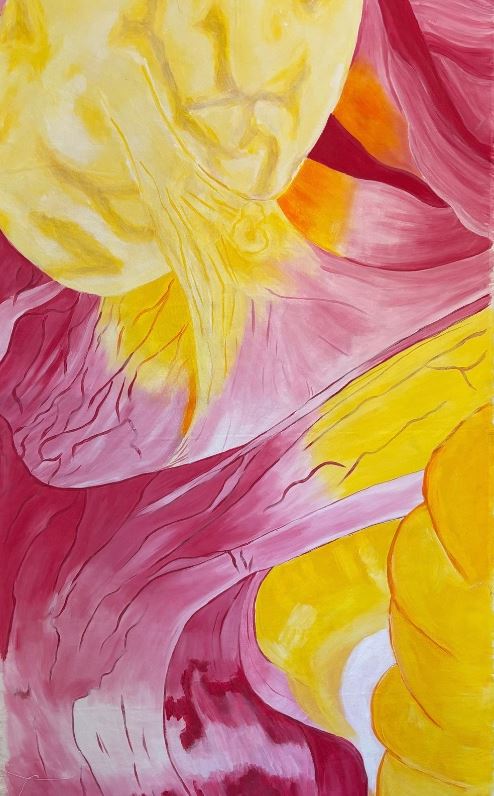
In, Transformation through time and preservation, Amber Regal, draws the peony through growth, bloom and decay, connecting a vision that cannot fully hold the detail of the world to a flower whose fleeting transformation mirrors the experience of seeing, and preserving details that might otherwise be lost to time.
In The Nature of Seeing, Anri du Plessis, explores how nature becomes a reflection of human experience and perception, connecting what we seek within ourselves to what we find in the world.
Brig Stanford, explores the stability of an unperceived identity, representing relational identity through fragmented environmental portraiture.
With “Klein Jakkalsies – Love is Unravelling“, Elzette Kotze-Naidoo explores the gradual disintegration of a marital union, as “little foxes” – unspoken and unresolved grievances – quietly infiltrate the physical and emotional relationship, threatening its romanticised ideals and the promises made at its beginning.
Emma van der Walt, explores emotional sensitivity and vulnerability through depictions of the human figure on fragile materials, inspired by personal experience.
In The Inner Life of the Flâneuse, Hannah Hunt, reinterprets the flâneuse, exploring the domestic space through personal experience of feeling comforted by its surroundings while sensing a constant urgency to leave.
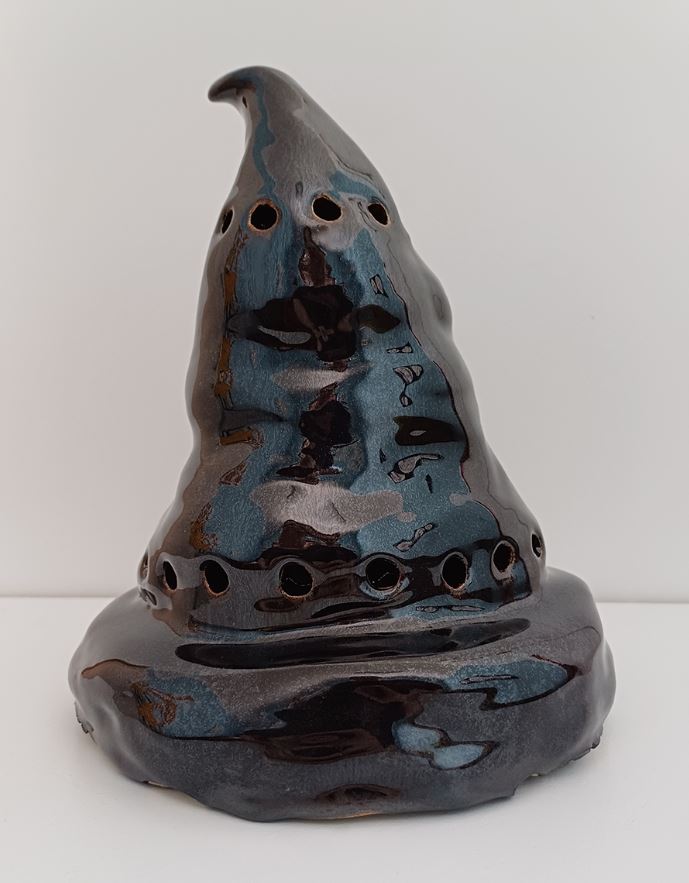
In The Craft Witch, Kate Bettesworth, combines craft techniques and illustrative storytelling to explore the power of symbolism and the magic of art-making.
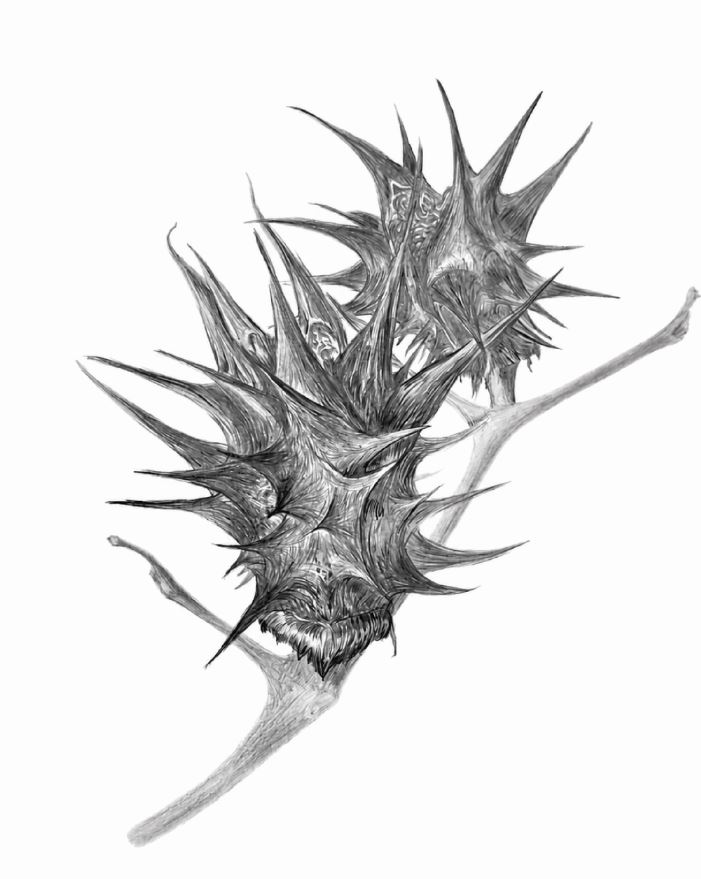
In The Unseen Bond, Martin Desiderati transforms seed forms into bodies of memory and care, using pareidolia to reveal the invisible bond between childhood, nurture and the woman who raised him.
Simone Fester, centres a body of work on endometriosis, a chronic pain disease, using imagery from the laparoscopic procedure that removed the growths, together with the emotions and ailments endured, to express the abstract and unseen aspects of the disease.
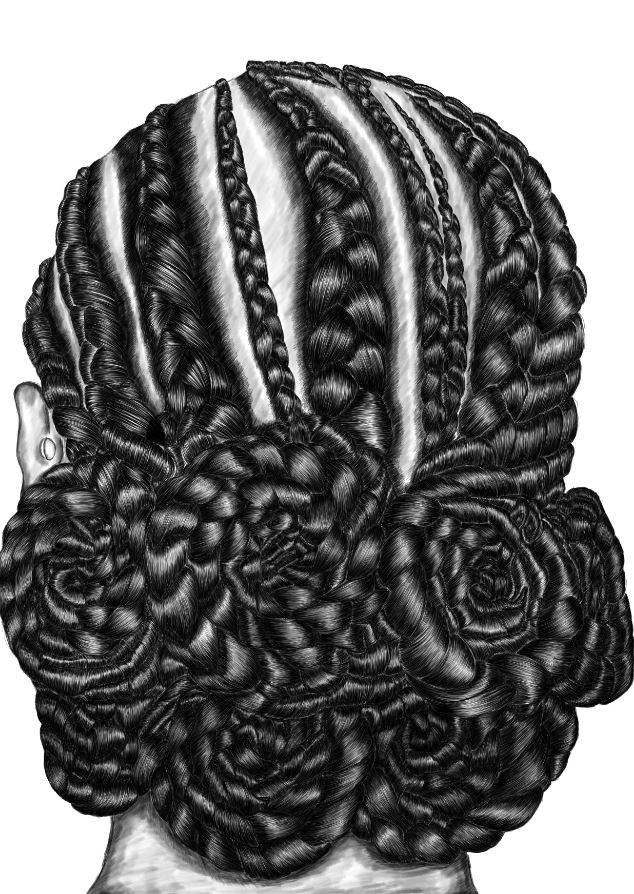
In I am just a girl, Zoku Mgoduka, draws on the African fractals in the designs of Xhosa women’s hair patterns to explore identity, memory and belonging, reflecting the burdens and expectations placed upon Black girlhood and the experiences that continue into womanhood.
Each of these visual stories is a knot in the net, and together they hold what connects us to one another, to memory and to the land.
ConneXion Curatorial Statement
~ Laurette de Jager